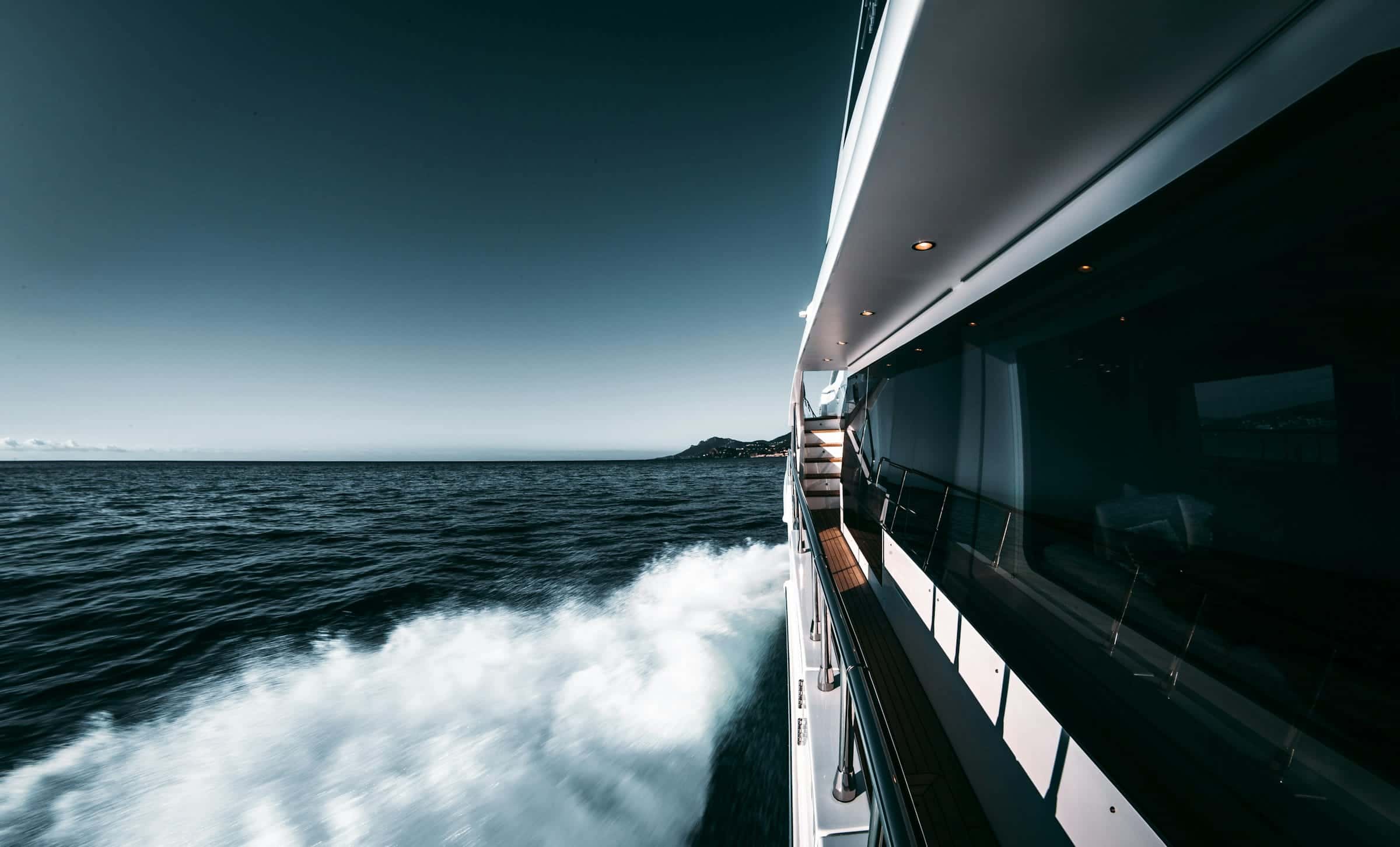
A brand born at Jeanneau
Prestige started at Jeanneau, in Les Herbiers, as a range of motor yachts, and belongs to Groupe Beneteau. The numbered models, in flybridge form or in the sportier S version, make up most of the used market. They were followed by the X-Line, the F-Line for flybridge yachts and the M-Line of power catamarans.
The oldest models sometimes appear under the Jeanneau name in listings, and some have had two generations under the same number. Check the exact name, version and year shown on the papers.
Engines, hours and maintenance
Depending on model and year, a Prestige is driven by pods, often joystick-controlled Volvo Penta IPS, or by a conventional drive. Buyers look at the type of engines, their hours and above all a regular service history, backed by work from an authorised dealer.
High hours are not a deal-breaker if the invoices show serious maintenance. Conversely, a yacht that has seldom left its berth but has no maintenance record worries an informed buyer, and the price reflects it.
Equipment that weighs
On a yacht of this size, the inventory accounts for much of the gap between two boats of the same model. Here is what buyers look at in particular.
- generator and air conditioning, with their hours and service record;
- a gyro stabiliser, where fitted;
- hydraulic bathing platform and tender, on models so equipped;
- navigation electronics and thrusters;
- condition of the teak, upholstery and covers;
- for an M-Line catamaran, a comparison with other power catamarans, not with monohulls.
VAT, flag and the boat's age
On a yacht, VAT status is one of the first points examined: VAT paid and evidenced, or a sale without VAT for a specific reason. The flag and cruising area also matter to buyers. A complete file, with proof of ownership, invoices and VAT evidence, avoids discussions that push the price down.
Whatever its age, the valuation compares your Prestige with similar yachts for sale today and gives a single rounded price. Indicative valuation. It does not replace a survey.