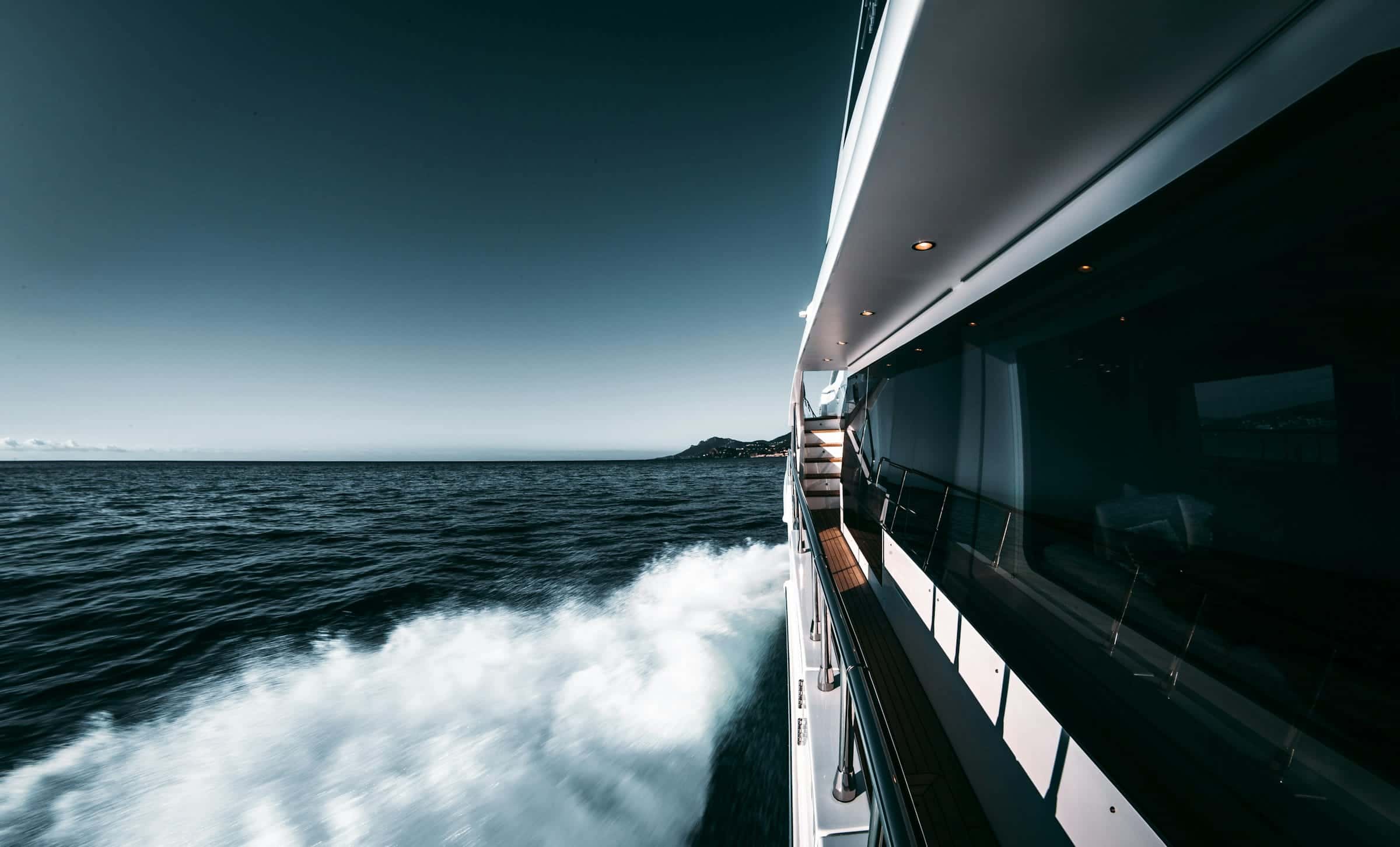
One Vendée yard, two worlds
Beneteau is based in Saint-Gilles-Croix-de-Vie, in the Vendée region of western France, and gives its name to Groupe Beneteau, which also includes Jeanneau, Prestige and Lagoon. Under sail, the Oceanis range covers cruising and the First a sportier programme, while the used market holds many Oceanis Clipper and Cyclades models. Under power, the families run from the Flyer and Antares to the Gran Turismo and Swift Trawler.
Each family has its own buyers. An Oceanis does not compare with a First of the same length, nor an Antares with a Gran Turismo: a sound valuation starts with the exact model name, version and year.
Sailing yachts: generation and charter history
The Oceanis has been renewed in successive generations at similar lengths, with different hulls, deck plans and layouts. Buyers think generation by generation: the last boat of one series and the first of the next are not worth the same, even if built a year apart.
Many Cyclades and Oceanis have spent time in charter. A former fleet boat is not worse by definition, but it often has more cabins, more engine hours and more tired sails. Private use backed by maintenance invoices adds value at resale.
Motor boats: what matters in each family
On a Flyer or Antares, often fitted with outboards, the year, horsepower and hours of the engines matter as much as the hull year, and a recent repower with an invoice adds value. On a Gran Turismo, the engines, their drive and a regular service record make the difference, along with the expected equipment: bow thruster, air conditioning, generator depending on size.
A Swift Trawler is designed to cover long distances at moderate speed. Its engine hours should therefore be read against its programme and service log, not in isolation. The generator, navigation electronics and tender are all part of what a buyer inspects.
Before you put your Beneteau on the market
- note the exact model name, version and year as shown on the papers;
- gather maintenance and replacement invoices: sails, rigging, engines, electronics;
- say clearly whether the boat has been in charter, and until when;
- photograph the engine hour meter with a visible date;
- have the evidence of VAT status ready;
- run the valuation with all this to hand: it all goes into the calculation.