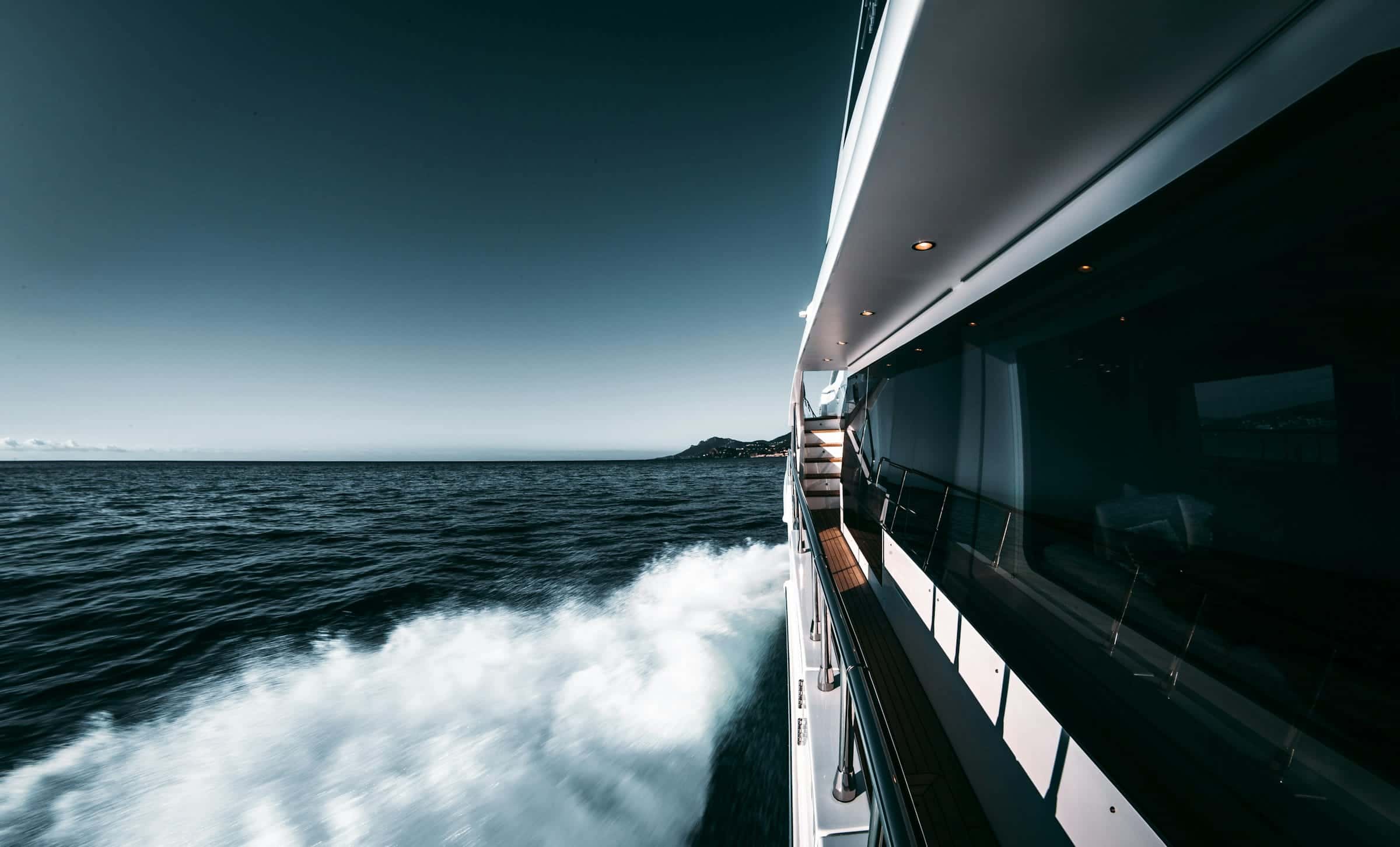
Each configuration has its own buyers
An open boat is for day trips and swimming; a hard top keeps the sun off while leaving the helm in the open air; a coupé encloses the helm and lengthens the season. A flybridge adds a second helm up top and more living space, and a trawler, slower, puts range and comfort on board first. Your boat is compared with others of the same configuration and similar size.
The model generation matters too. When a yard renews a model, it often changes the hull, the deck layout or the engines: at the same length, two generations are not directly comparable.
Engines and drive type
Outboard, sterndrive, shaft or pods: each option has its own running costs and inspection points. An outboard is easier to replace than an inboard engine, a shaft drive is simple and robust, and pods make manoeuvring easier but need servicing to the engine maker's schedule.
Engine hours are read against the age of the boat. Low hours are not always a plus, because an engine that has barely run for years may need a full overhaul. What reassures buyers is a set of annual service invoices and a dated hours reading.
The equipment that counts in the price
- generator and air conditioning, expected on a cruising boat;
- a stabiliser, which changes comfort at anchor;
- bow and stern thrusters, for manoeuvring in harbour;
- a hydraulic bathing platform and passerelle;
- navigation electronics and their age;
- teak on deck and in the cockpit, if it is in good condition.
VAT, flag and papers
A boat with VAT paid and evidenced does not sell at the same price as a VAT-unpaid boat: a buyer cruising in the EU needs to know what they will have to pay. The registration, bill of sale, VAT evidence and CE declaration of conformity should be ready before the first viewings.
Once you have your valuation, look at the boats listed in the summary sent by email: you will see which listings the price is based on. Indicative valuation. It does not replace a survey.